Image Type
Lumbar Lordosis
1) Description of Measurement
Lumbar lordosis is the natural inward curve of the lower spine. It’s important for maintaining upright posture and overall spinal balance.
2) Instructions to Measure
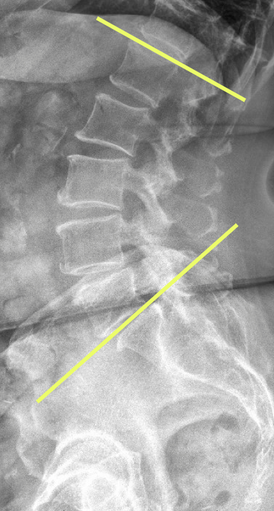
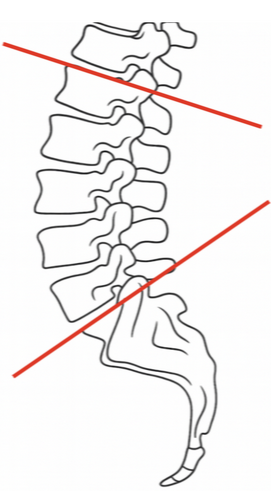
On a lateral lumbar X-ray, lumbar lordosis is typically measured by drawing lines along the superior endplates of L1 and S1, then erecting perpendiculars to each; the angle formed at their intersection is recorded as the lumbar lordosis angle.
3) Normal vs. Pathologic Ranges (a bit controversial)
Normal range: ~40°–60°
< 40°: Hypolordosis (can indicate flat back or postural imbalance)
> 60°: Hyperlordosis (seen in conditions like spondylolisthesis or postural compensations)
4) Important References
Warner WC, Sawyer JR. Scoliosis and kyphosis. In: Azar FM, Beaty JH, eds. Campbell's Operative Orthopaedics. 14th ed. Philadelphia, PA: Elsevier; 2021:chap 44.
Ng JK, Kippers V, Richardson CA, Parnianpour M. Range of motion and lordosis of the lumbar spine: reliability of measurement and normative values. Spine. 2001 Jan 1;26(1):53-60.
Chun SW, Lim CY, Kim K, Hwang J, Chung SG. The relationships between low back pain and lumbar lordosis: a systematic review and meta-analysis. The Spine Journal. 2017 Aug 1;17(8):1180-91.
5) Other info....
Lumbar lordosis plays a big role in maintaining overall sagittal balance